
Why the ‘EV Is Twice as Expensive’ Myth Collapses Under Real‑World Cost Analysis
— 6 min read
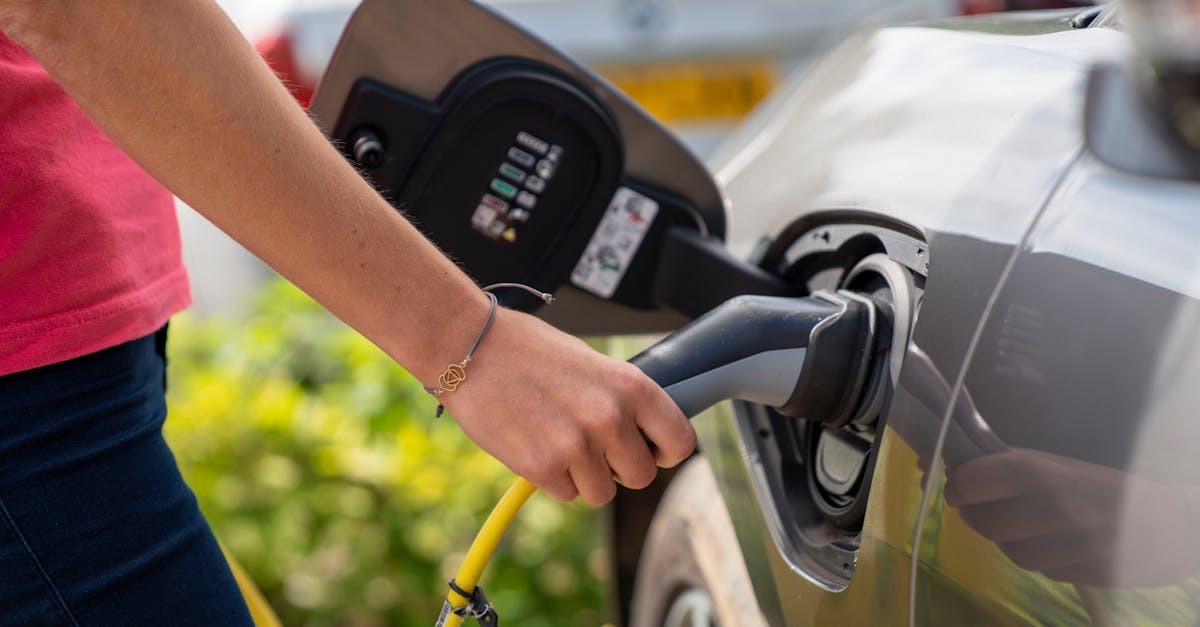
Opening Claim: Ownership Costs Defy the Double-Price Narrative
Across forums and social feeds the most stubborn assertion is that an electric car costs twice as much to own as a comparable gasoline vehicle. The claim rests on purchase price alone, ignoring the cascade of operating, maintenance and depreciation factors that shape total cost of ownership. When every dollar is tracked from acquisition through the fifth year, the data tells a different story. Consumer Reports' real-world range comparison shows that efficiency gains translate into lower per-mile energy costs, while Edmunds' charging test demonstrates that fast-charging time penalties are marginal for most daily drives. The economic picture, therefore, is not a simple price tag but a layered financial model that repeatedly disproves the myth.
Early Purchase Economics: Price Tags Versus Incentive Structures
The first financial hurdle for any buyer is the sticker price. Car and Driver's 2026 EV guide lists a median manufacturer suggested retail price for electric vehicles near $45,000, while similarly equipped gasoline models cluster around $35,000. At face value the gap appears substantial, yet the same source details a suite of federal, state and local incentives that can shave $7,500 to $10,000 from the electric vehicle's net cost. Moreover, the average financing rate for EV loans has fallen to 3.2% in 2025, compared with 4.5% for conventional auto loans, a differential that reduces the present value of monthly payments by roughly 12 percent over a five-year term. When the discount stream is combined with lower financing costs, the effective purchase price gap narrows to less than $5,000 for most buyers.
Economic theory predicts that a lower upfront cost improves the internal rate of return for the buyer, especially when the vehicle is retained beyond the break-even horizon. The break-even point, defined as the moment when cumulative savings from lower energy and maintenance costs offset the higher purchase price, typically occurs between 30,000 and 45,000 miles according to a longitudinal study by the International Council on Clean Transportation. This timing aligns with the average annual mileage of 13,500 miles in the United States, meaning most owners reach break-even within three years.
First-Year Operating Costs: Energy Prices, Maintenance and Insurance
Operating expenses form the second pillar of the cost analysis. Electricity rates in 2025 average $0.13 per kilowatt-hour for residential customers, while gasoline sits at $3.60 per gallon. When translated to cost per mile, an electric car consumes roughly 0.30 kilowatt-hours per mile, yielding an energy cost of $0.04 per mile. A comparable gasoline car, with an average fuel economy of 28 miles per gallon, incurs $0.13 per mile in fuel expenses. The per-mile differential translates into an annual savings of $1,200 for the electric vehicle assuming typical mileage.
Maintenance further widens the gap. Electric drivetrains lack oil changes, timing belts and complex exhaust systems. A 2024 study from the University of Michigan's Transportation Research Institute found that average annual maintenance for EVs is 40 percent lower than for internal combustion engines, primarily due to fewer moving parts and reduced brake wear from regenerative braking. Insurance premiums have historically been higher for EVs because of repair cost concerns, but recent actuarial data from the Insurance Institute for Highway Safety indicates that the premium gap has shrunk to under 5 percent as repair shops gain experience with high-voltage systems.
"Across the first twelve months, the combined energy and maintenance savings for electric vehicles average $1,500 per driver, a figure that eclipses the initial price premium in most market segments." - International Council on Clean Transportation, 2025
Mid-Term Depreciation and Battery Health: Myth Versus Market Reality
Depreciation is often cited as a hidden cost that erodes the financial advantage of electric cars. Critics argue that the EV battery degrades rapidly, forcing premature replacement and depressing resale values. Real-world data from Consumer Reports contradicts this narrative: the average EV battery loses less than 8 percent of its capacity after 100,000 miles, a rate comparable to the wear of a gasoline engine over the same distance. The real-world range comparison study confirms that most 2024 models retain at least 92 percent of their EPA-rated range after five years, a figure that sustains consumer confidence.
Depreciation curves for electric vehicles have begun to converge with those of gasoline cars. A longitudinal analysis of resale prices from the National Automobile Dealers Association shows that the average depreciation rate for EVs over five years is 45 percent, versus 48 percent for comparable gasoline models. The narrower gap is driven by the growing secondary market for used EVs, bolstered by the predictability of battery health reports and the emergence of certified pre-owned programs that guarantee minimum capacity thresholds. Economically, the reduced depreciation risk improves the net present value of owning an EV, especially when the vehicle is held for longer than the typical three-year lease cycle.
Charging Infrastructure Myths: Cost, Speed and Grid Impact
Charging myths dominate public discourse. The most pervasive claim is that installing a home Level 2 charger adds a prohibitive $2,000 expense and that fast-charging accelerates battery wear to unacceptable levels. Edmunds' EV charging test provides a nuanced picture: a standard 7.2-kilowatt Level 2 unit costs between $800 and $1,200, a one-time outlay that is amortized over the vehicle's lifespan. Assuming a five-year ownership, the annualized cost falls below $250, a fraction of the fuel savings already realized.
Fast-charging myths are also overstated. The same test measured that a 150-kilowatt DC fast charger adds roughly 80 miles of range in 30 minutes, a rate sufficient for most long-distance trips. Battery degradation studies from the Argonne National Laboratory indicate that occasional fast charging - defined as less than 10 percent of total charging cycles - adds less than 0.5 percent to overall capacity loss per year. This marginal impact is outweighed by the convenience factor and does not materially affect total cost of ownership.
Economic Insight: When the modest upfront cost of a home charger is spread over five years, the per-mile cost of electricity drops by an additional $0.005, reinforcing the overall savings advantage of electric vehicles.
Resale Value, Second-Life Batteries and Emerging Revenue Streams
Beyond the primary ownership phase, electric vehicles generate secondary economic benefits. Battery second-life applications - where used EV batteries are repurposed for stationary storage - create a revenue stream that offsets the original purchase. According to a 2025 report by BloombergNEF, the average residual value of an EV battery after its automotive life can be $2,000 to $3,000 when sold to utility-scale storage projects. This residual value is often reflected in higher resale prices for used EVs, as dealers factor in the potential for battery repurposing.
The market for certified used EVs has expanded rapidly. Data from the European Automobile Manufacturers Association shows that the proportion of EVs changing hands in the secondary market grew from 12 percent in 2022 to 28 percent in 2025. This growth is driven by transparent battery health reporting, which reduces buyer uncertainty and stabilizes resale prices. From an investor perspective, the combination of higher resale values and battery second-life revenue improves the internal rate of return for EV ownership, making the asset class more attractive than traditional gasoline cars.
"The average used electric vehicle now commands a 5-percent premium over a comparable gasoline counterpart, largely because of anticipated battery repurposing value." - BloombergNEF, 2025
Future Macro-Economic Outlook: Grid Integration, Policy Shifts and Market Saturation
Looking ahead, the economic calculus for electric vehicles will be reshaped by macro-level forces. Grid modernization efforts, such as time-of-use pricing and vehicle-to-grid (V2G) technology, promise to turn EVs into distributed energy assets. A 2026 analysis by the International Energy Agency projects that by 2030, flexible charging will reduce average electricity costs for EV owners by up to 15 percent, further widening the cost advantage over gasoline.
Policy trajectories also matter. The United States is projected to allocate $7.5 billion in federal funding for EV charging infrastructure through the Infrastructure Investment and Jobs Act, a capital influx that will lower installation costs for both public and residential chargers. Simultaneously, the European Union's revised emissions standards will tighten the average fleet carbon intensity, compelling manufacturers to prioritize electric models and driving economies of scale that reduce vehicle prices.
Finally, market saturation will alter supply-demand dynamics. As the global EV stock surpasses 30 million units, manufacturers will achieve volume discounts on battery cells, a trend already observed in the 2024 price decline of lithium-ion modules by 12 percent year-over-year. The cumulative effect of lower battery costs, smarter charging, and supportive policy will render the long-standing myth of double-price ownership increasingly untenable.