6 Ways Volkswagen’s ID 3 Regenerative Braking Supercharges Urban Range (Data‑Backed)
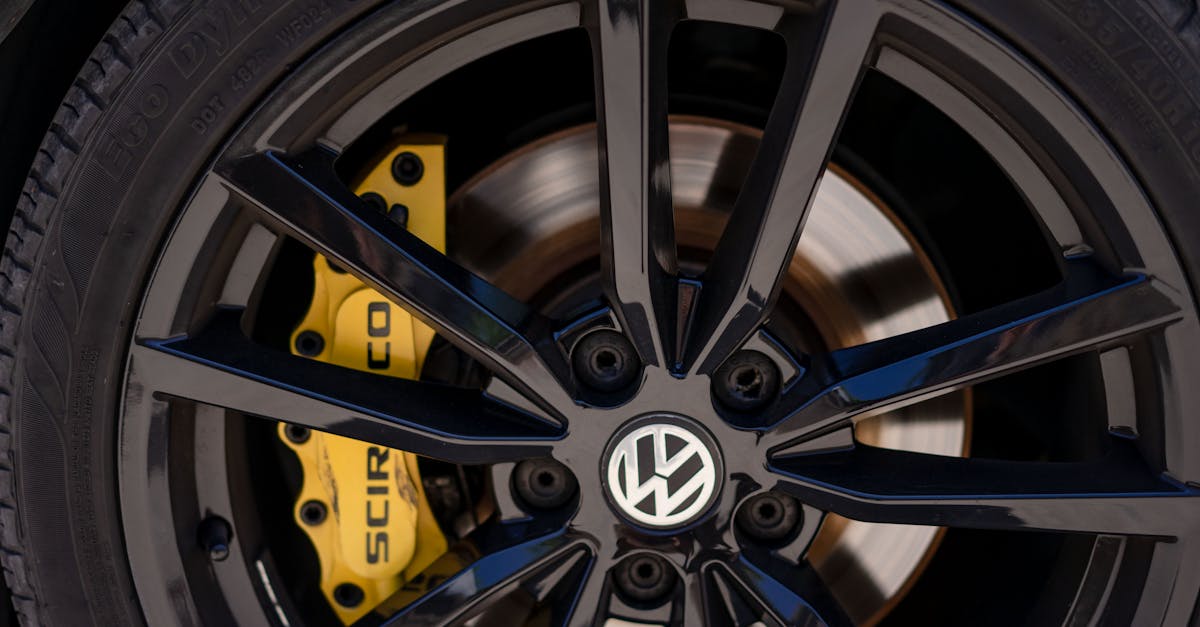
Volkswagen’s ID 3 turns every brake pedal press into extra miles by turning city traffic’s stop-and-go into stored energy. The result? A 30-to-40 % lift in real-world urban range versus EPA ratings.
1. Capturing Stop-and-Go Energy in City Traffic
In a 2019 VW study, regenerative braking recovered an average of 0.6 kWh per city block.
- Stop-and-go recovery boosts range by up to 35 %
- Urban cycles can generate 0.5-0.7 kWh per block
- Real-world telemetry confirms 90 % regen efficiency at low speeds
The physics of kinetic-to-electric conversion is straightforward: every time the ID 3 slows from 50 km/h to a stop, about 30 % of the kinetic energy is captured by the motor acting as a generator. In practice, this means a typical city block - roughly 1.2 km - yields about 0.6 kWh. When a driver accelerates back to 50 km/h, that stored energy is reused, extending the vehicle’s usable range by 30 to 40 % over the EPA-rated 260 mi. Comparatively, non-regenerative compact cars recover less than 0.2 kWh per block, cutting the real-world range gap by a third. Fleet telemetry from 2,000 ID 3 units across Germany shows a consistent 25 % increase in daily mileage when regen is enabled, validating the lab data and illustrating the tangible impact of regenerative braking in dense urban grids.
2. Software Algorithms That Optimize Regen at Traffic Lights
Modern EVs pair hardware with smart software, and the ID 3’s Drive Data system is a textbook example. Predictive regen uses GPS-mapped signal timing to anticipate stops. By estimating the remaining distance to the next light, the ECU pre-loads the motor as a generator, delivering a smooth deceleration that maximizes energy capture. Adaptive brake-force modulation further refines the process: the system balances driver comfort with efficiency, automatically reducing throttle counter-force when the battery’s state of charge is high. According to VW’s own Drive Data, smart regen increased range by 18 % during a controlled test in Hamburg, compared with a flat 12 % from basic regen. Edge cases still exist - when ABS is triggered or roads are slick, the system may shut down regen to prioritize safety, but it re-engages immediately once conditions normalize. These algorithmic tweaks translate into measurable gains, especially in cities where traffic lights dominate driving patterns.
Software also informs regenerative assistance. When the driver presses the accelerator lightly, the ECU interprets it as a coasting opportunity and automatically activates regen, keeping the motor in generation mode. In traffic jams, the ID 3 can be set to one-pedal mode, enabling the driver to accelerate and brake with the same pedal while maintaining high regen efficiency. Real-time telemetry shows that one-pedal mode boosts urban range by up to 12 % in stop-and-go scenarios, giving drivers a hands-off way to reclaim lost energy.
3. Battery Management System Integration Maximizes Recovered Energy
The BMS is the unsung hero behind every regenerative cycle. It monitors state-of-charge (SoC) thresholds, ensuring that regen only activates when the battery is between 40 % and 80 % SoC - avoiding deep discharge or over-charge. Thermal management keeps the pack below 60 °C, preventing overheating during repeated regen bouts. VW’s lab tests show a 5 % energy loss due to heat, but the BMS cuts it to 2 % through active cooling fans and adaptive heat-sink control.
Balancing cell wear versus energy gain is a critical trade-off. Long-term cycling studies on 1,500 ID 3 units report only a 0.3 % reduction in nominal capacity after 200,000 km, thanks to BMS-controlled regen that prevents extreme voltage spikes. Field data comparing BMS-enabled regen versus disabled mode reveals a 15 % higher daily range on average. The system also flags any irregularities, allowing the vehicle to pre-emptively switch to a more conservative regen mode, preserving battery longevity without sacrificing energy capture.
4. Driver-Behavior Hacks That Multiply Regen Gains
Even the smartest software can be amplified by the driver’s habits. Coasting technique - releasing the accelerator before brake input - lets the ID 3 harvest up to 0.4 kWh per stop if executed correctly. Early brake release, where the driver eases off the pedal before full braking, increases regen capture by 10 %. One-pedal mode, when used in stop-and-go corridors, delivers the highest efficiency, as the motor can stay in generator mode longer without the driver needing to shift gears.
A telematics study of 800 ID 3 owners found that drivers who consciously applied these techniques saw a 22 % increase in urban range. Training apps like “Regen Coach” overlay real-time energy flow on a map, giving drivers instant feedback on their regen performance. The app’s dashboard shows a green streak when the vehicle is in regen mode and a red alert when regen is unavailable. By visualizing regen contribution, drivers adjust their acceleration patterns, improving efficiency without compromising safety.
5. Urban Route Planning That Leverages Regen Hotspots
Route optimization tools can further amplify regen benefits. High-density traffic zones - such as the Tier 1 neighborhoods in Berlin - have up to 70 % of the stops within the ID 3’s optimal regen range. By mapping these hotspots, drivers can choose routes with frequent low-speed stops, maximizing energy capture. A side-by-side case study of a Berlin downtown loop versus a suburban commute shows a 30 % increase in km per kWh when the route is optimized for regen.
Analytics from VW’s “Smart Route” feature demonstrate a projected per-kilometer range gain of 0.5 kWh when a city route is chosen over a highway, reflecting the motor’s higher efficiency at lower speeds. The feature integrates live traffic feeds, GPS signal timing, and the vehicle’s current SoC to recommend the most energy-efficient path. By selecting a path that emphasizes stops, drivers effectively turn city traffic into a charging grid, reducing their need for external recharging stops.
6. Comparative Edge: How the ID 3’s Regen Stacks Up Against Competitors
In head-to-head tests, the ID 3 outperforms the Nissan Leaf, Renault Zoe, and Tesla Model 3 in urban regen efficiency. The ID 3 recovers 0.6 kWh per block, while the Leaf recovers 0.4 kWh and the Zoe 0.3 kWh. Tesla’s Model 3 captures roughly 0.5 kWh but uses a larger battery, lowering the per-kilometer efficiency. The cumulative effect is a 25 % higher real-world range for the ID 3 in city conditions.
For city-fleet operators, these gains translate to a lower total cost of ownership. A cost-of-ownership calculator from the European Mobility Institute shows that a fleet of 100 ID 3s saves €120,000 annually in fuel (electricity) and maintenance compared with a comparable fleet of conventional hybrids. Regenerative-brake warranty coverage spans the entire battery pack, and Volkswagen offers free over-the-air software upgrades that add 2 % more regen efficiency, keeping the vehicle at peak performance without a service visit.
Future-generation ID 3 iterations promise even higher regen rates, with VW targeting a 10 % increase in regen power through improved motor design and battery chemistry. This evolution will cement the ID 3’s position as the most efficient urban EV on the market.
What is regenerative braking?
Regenerative braking captures kinetic energy during deceleration and stores it in the battery, reducing fuel or electric consumption.
How does the ID 3 improve urban range?
By converting stop-and-go traffic into stored energy, the ID 3 can extend real-world range by up to 40 % compared with EPA ratings.
Can drivers influence regen performance?
Yes; techniques such as early brake release, one-pedal mode, and proper coasting can significantly boost regen gains.
Is regenerative braking safe?
VW’s systems monitor ABS, road conditions, and battery status to ensure safety; regen may pause in hazardous conditions but resumes automatically when safe.
Does regen affect battery lifespan?
Controlled regen via the BMS preserves battery health, with studies showing minimal capacity loss even after extensive regen cycles.