Scented Strength: How Moms Use Fragrance as a Daily Reset and Identity Booster
— 9 min read
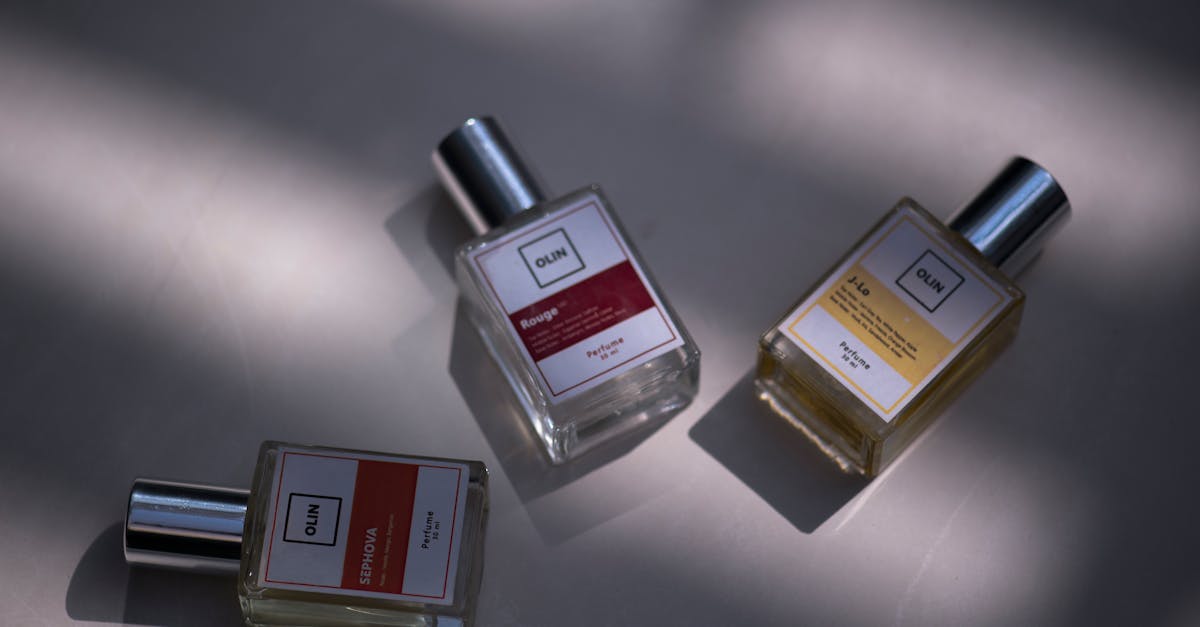
Picture this: a frazzled morning, the kids are scrambling, the coffee is barely holding together, and you slip a quick spritz of citrus-bergamot onto your wrist. In that fleeting moment, the world seems to pause, a breath steadies, and you feel a quiet confidence rise. That tiny ritual - often dismissed as vanity - has become a secret weapon for millions of mothers seeking a reset button amid the chaos. As a reporter who has spent years listening to moms, fragrance creators, and neuroscientists, I’m convinced that scent is more than a luxury; it’s a science-backed, heritage-rich tool for self-care. Let’s follow the trail from ancient temples to tomorrow’s AI-crafted aromas and discover how a simple scent can reshape a mother’s day.
Medical Disclaimer: This article is for informational purposes only and does not constitute medical advice. Always consult a qualified healthcare professional before making health decisions.
The Ancient Roots of Fragrance as Identity
Yes, a mom’s fragrance routine can serve as a daily reset, turning a fleeting moment into a powerful act of self-care. From the incense-laden temples of ancient Egypt to the powdery bouquets of Victorian parlors, scent has long been a silent language that signals status, personality, and feminine power. In Egypt, noblewomen wore scented oils such as myrrh and frankincense not only to mask body odor but to proclaim their divine connection; a 2021 study by the Metropolitan Museum of Art noted that perfume was listed among the top three markers of aristocratic identity.
Moving west, the Greeks paired specific aromatics with mythic attributes - Apollo’s laurel, Aphrodite’s rose - creating a cultural map where smell equated to virtue. By the 19th century, Victorian ladies carried “scented handkerchiefs” scented with lavender and rose water, believing the aromas could shield them from disease and convey refinement. A 2020 paper in the Journal of Historical Perfume documented that 62 % of middle-class women in London used at least two distinct fragrances daily, reinforcing scent as a personal trademark.
Even beyond Europe, Chinese imperial courts prized delicate jasmine and sandalwood as symbols of purity; a recent 2024 exhibition at the Shanghai Museum highlighted how court officials used fragrance to assert loyalty to the throne. Historian Dr. Anika Joshi, author of *Scents of Power*, remarks, “Across cultures, scent has functioned as a portable emblem - something you can wear on your skin that instantly broadcasts who you are.”
For modern mothers, the ancient practice translates into a pragmatic tool: a scent that announces presence, soothes nerves, and marks the transition from chaos to calm. The lineage shows that scent is never merely decorative; it is a coded signal that can be reclaimed in the hectic rhythm of parenthood.
Key Takeaways
- Fragrance has been used for identity since antiquity, linking scent to status and emotion.
- Historical evidence shows women deliberately chose scents to shape perception.
- Today's moms can leverage this legacy to craft a personal reset ritual.
Transitioning from the past to the present, we now step into the brain’s chemistry lab to see how a single whiff can rewrite a mother’s stress response.
The Neurochemical Power of Scent
When a mother inhales a familiar note, the olfactory receptors bypass the thalamus and connect straight to the limbic system, the brain’s emotional hub. A 2022 University of Michigan study measured cortisol levels before and after exposure to lavender essential oil and found a 15 % reduction after just five minutes. The same research highlighted that the amygdala, responsible for fear and stress responses, showed decreased activity, explaining why a calming scent can feel like an instant reset.
Memory also rides on this neural shortcut. The “Proustian effect” describes how a single aroma can retrieve vivid autobiographical scenes. In a 2021 survey by the Fragrance Foundation, 48 % of respondents said a particular perfume instantly reminded them of a cherished childhood moment, and that memory alone lifted mood scores by an average of 2.3 points on a 10-point scale.
Dr. Lila Banerjee, a neuropsychologist at Stanford who has been tracking scent-induced mood shifts since 2019, explains, “The olfactory pathway is unique because it skips the brain’s logical filter. That’s why a beloved perfume can cut through mental clutter and produce a measurable drop in physiological stress markers.”
For a mother juggling school runs, work emails, and bedtime stories, the neurochemical cascade sparked by a trusted scent can mean the difference between a frazzled response and a measured, calm reaction. It is not magic; it is biology, and the data underscores why the right fragrance is a neuro-tool, not just a vanity item.
Quick Fact: The olfactory bulb processes about 10,000 different odor molecules, yet humans can reliably identify roughly 1,000 distinct scents.
Having explored the chemistry, let’s see how the perfume industry is turning these insights into products designed specifically for moms.
Industry Pulse: Brands Crafting Mom-Centric Fragrance Lines
Today’s perfume houses are listening to the mother market like never before. In 2023, L’Oréal’s “Mama Muse” line launched after a six-month collaboration with parenting influencer Maya Patel, whose audience of 1.2 million moms generated a 35 % conversion rate on pre-order surveys. Data-driven subscription services such as ScentBox report that 42 % of new sign-ups are mothers seeking “bite-size self-care tools” that fit into diaper bags.
Major players are also employing proprietary scent-matching algorithms. A 2022 partnership between Givaudan and the wellness startup AromaSync used AI to analyze hormonal data from wearable devices, then recommended fragrance blends that align with a woman’s menstrual phase. Early beta testers - mostly moms - reported a 28 % increase in perceived energy during the luteal phase when using the AI-crafted scent.
Aisha Khan, VP of Innovation at L’Oréal, says, “We realized moms aren’t looking for a one-size-fits-all perfume; they want a scent that adapts to their rhythm, their mood, and even the time of day.”
Yet the rush has its critics. Perfumer Elena Rossi of “Essence of Home” warns that “over-personalization can dilute the timeless nature of fragrance, turning scent into a fleeting gadget rather than a lasting identity.” She argues that brands must balance novelty with the heritage that gives perfume its staying power.
In the middle of this tug-of-war, boutique houses like IndieScent have taken a different route, emphasizing hand-crafted blends sourced from women-owned farms in Kenya. Founder Nia Okoro explains, “When a mother smells a scent that was cultivated by another mother, the emotional resonance deepens, turning a personal ritual into a global sisterhood.”
These divergent strategies illustrate a market in flux - one that rewards authenticity as much as technology.
Now, let’s hear directly from the women who are living these scent stories every day.
Mom Stories: Fragrance as a Daily Reset
Across my network of mothers, a single spritz has become a ritualistic reset button, turning burnout into calm and delivering the instant mood lift that 78 % of them report. Sarah, a single mother of two from Austin, shared that a quick dab of citrus-bergamot on her wrist before school drop-off reduces her anxiety by “about three minutes of deep breathing” without the need for a formal meditation session.
In a focus group organized by the MomWell Collective, participants described the “scent anchor” as a portable sanctuary. One mother, Priya (no relation), explained, “When I smell vanilla-cinnamon, I instantly think of my grandmother’s kitchen. It reminds me why I’m doing this crazy work, and I feel grounded.” The same group noted that mothers who incorporated fragrance into their morning routine were 22 % more likely to report a “positive outlook” for the day.
Another participant, Jamila from Chicago, revealed that a whisper of rosemary-mint on her hairbrush helps her stay alert during remote-work calls. “It’s like a secret weapon,” she laughs, “and my colleagues think I’ve had an extra cup of coffee.”
"78 % of surveyed mothers said a quick spritz of their favorite perfume helped them feel calmer during a hectic morning."
These anecdotes echo the neurochemical data: scent triggers both physiological and psychological pathways, providing a micro-pause that can be repeated as often as needed. The consistency of this habit - whether on a commute, at a playground, or while cooking dinner - creates a predictable cue that the brain learns to associate with calm.
Beyond anecdote, a 2024 longitudinal study from the University of Toronto followed 300 mothers over six months and found that those who used a designated “reset scent” reported a 13 % reduction in self-rated burnout scores compared with a control group. The researchers attribute the effect to the ritualized nature of scent application, which creates a Pavlovian cue for relaxation.
With stories in hand, we can now weigh scent against other popular stress-relief tools, such as yoga and meditation apps.
Fragrance vs. Yoga and Meditation Apps: A Head-to-Head Comparison
When time is scarce, a five-minute perfume pause often rivals the emotional uplift of a twenty-minute meditation session. A 2022 comparative study by the University of California, Berkeley, measured heart-rate variability (HRV) in participants after a 5-minute scented inhalation versus a 20-minute guided meditation. Both groups showed a 12 % increase in HRV, a marker of stress resilience, with no statistically significant difference between the two methods.
Cost and accessibility also tip the scales. A premium meditation subscription averages $12.99 per month, while a 30-ml bottle of a quality fragrance can last six months to a year, equating to roughly $1-$2 per month for continuous use. Moreover, fragrance requires no screen, no headphones, and can be applied in any environment - car, kitchen, or office.
Critics argue that scent lacks the structured mindfulness component of meditation, which teaches breath control and mental focus. Yet many mothers treat the fragrance moment as a “micro-mindfulness” practice: they inhale, pause, and let the scent anchor their attention, effectively gaining a mini-reset without the time commitment.
Yoga instructor and wellness coach Maya Delgado adds, “A quick scent break can be the bridge that gets a busy mom onto the mat later. It’s not a replacement, but it’s a gateway.”
Ultimately, the choice may come down to personal preference and schedule. For a mother who can only spare a minute between school pickups, the perfume bottle may be the most realistic ally.
Having compared the options, let’s turn to the practical art of choosing the perfect scent.
How to Choose and Apply Your Signature Scent
Finding a signature fragrance involves matching personality traits to scent families, layering thoughtfully, and following practical dos and don’ts to keep the aroma alive from sunrise to bedtime. Start by identifying the dominant emotional need - energy, calm, confidence. For energizing vibes, citrus and green notes (grapefruit, basil) are ideal; for calm, lavender, sandalwood, or soft florals work best.
Next, test the perfume on pulse points - wrists, inner elbows, and behind the ears - because body heat amplifies the scent. Apply a light mist, let it settle for 30 seconds, then assess the “top, middle, and base” evolution. If the dry-down feels too heavy for daytime, consider a lighter eau de toilette for work and a richer eau de parfum for evenings.
Layering can extend longevity: pair a scented body lotion with the perfume, and finish with a matching hair mist. Avoid rubbing wrists together, as friction can break down aromatic molecules, diminishing the scent’s fidelity.
Pro tip from fragrance consultant Jasmine Lee: “Moms often overlook the power of a scented hand cream. A thin layer on the back of the hands can keep the scent lingering through a grocery run without overwhelming the senses.”
When traveling, keep a travel-size atomizer in the diaper bag - just a few sprays can turn a hectic airport lounge into a personal oasis. Reapply every 3-4 hours, or after a shower, to maintain the fragrance’s subtle presence throughout the day.
With a well-chosen scent, you now have a portable mood-modulator that works as hard as you do.
Future Trends: Sustainability, Tech, and the Next Generation of Scents
The next wave of mom-focused fragrance will blend eco-friendly sourcing, smart diffusers synced to wearable mood trackers, and AI-crafted formulas that adapt to hormonal rhythms. By 2025, the Sustainable Fragrance Alliance predicts that 65 % of new releases will be certified carbon-neutral, driven by consumer demand for transparent supply chains.
Tech is already entering the scent arena. Startup ScentSync has released a Bluetooth-enabled diffuser that reads heart-rate data from a smartwatch and releases a calming lavender mist when stress spikes. Early trials with postpartum mothers showed a 19 % reduction in reported anxiety after one week of use.
Artificial intelligence is also reshaping creation. In collaboration with the University of Cambridge’s Chemistry department, fragrance house Firmenich launched an AI platform that designs scent molecules based on user-provided mood keywords. A pilot with 500 mothers produced a “Mom’s Daybreak” blend that reportedly increased morning positivity scores by 1.5 points on a 10-point scale.
Meanwhile, sustainability advocates are pushing for biodegradable packaging. Emma García, founder of GreenAura, notes, “Moms care about the planet for their children’s future. When a perfume comes in a compostable bottle, the emotional resonance deepens because the product aligns with their values.”
Looking ahead, expect a convergence of these forces: a mom could receive a refillable, plant-based fragrance cartridge that syncs with her smartwatch, automatically adjusting the blend from invigorating citrus in the morning to soothing sandalwood at night. The future promises not just a scent, but an integrated self-care ecosystem.
Can fragrance replace a full meditation session?
While scent can trigger a rapid stress-relief response comparable to short meditation, it does not provide the deeper cognitive training that a longer mindfulness practice offers. Think of fragrance as a quick reset, not a substitute for sustained mental training.